Exploring the genetic and ecological factors driving antibiotic resistance — and pioneering new technologies to design effective, evolution-inspired therapeutic strategies.
Kyle J. Card, Ph.D. · HHMI Hanna H. Gray Postdoctoral Fellow
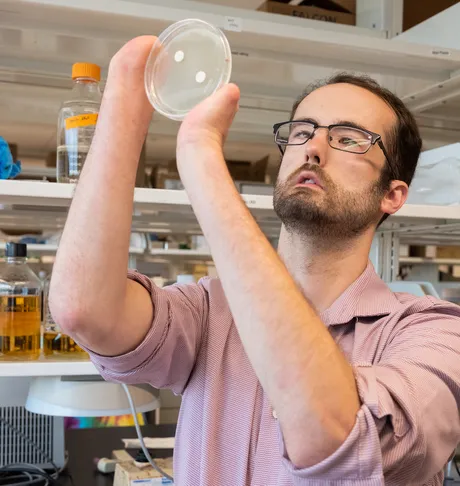
I am dedicated to understanding and combating antibiotic resistance. My research combines experimental
evolution, functional genomics, and computational modeling to identify the genetic and environmental
factors that drive resistance. By integrating these approaches, I aim to develop innovative strategies to
predict and guide the evolutionary trajectories of pathogens, ultimately improving treatment outcomes.
I am a disabled scientist born with a rare neurological condition called Moebius syndrome, which affects
the muscles controlling facial expressions and eye movement. I also have several limb differences.
Although my disabilities pose challenges, my identity as a disabled person has enriched my academic life
in many ways. Through my lived experiences, I appreciate that, despite our differences, our curiosity
about the natural world binds us together, each of us has a unique story that should be respected, and we
all deserve a voice in science.
I am committed to creating and maintaining an environment in which all are welcome and respected — one
that is inclusive of race, gender, faith, sexual orientation, ability, and socioeconomic status.
Limiting resistance in the clinic.
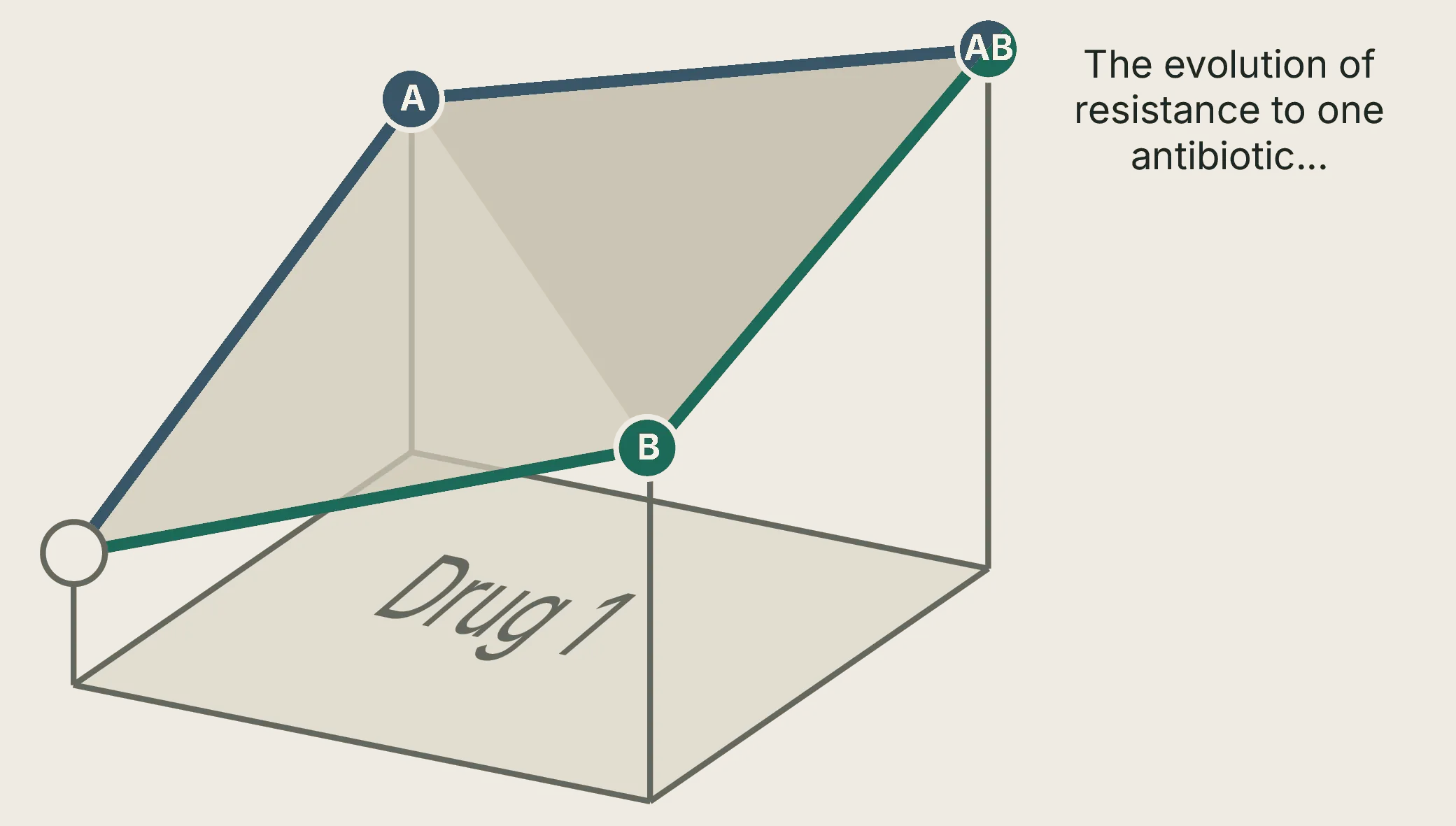
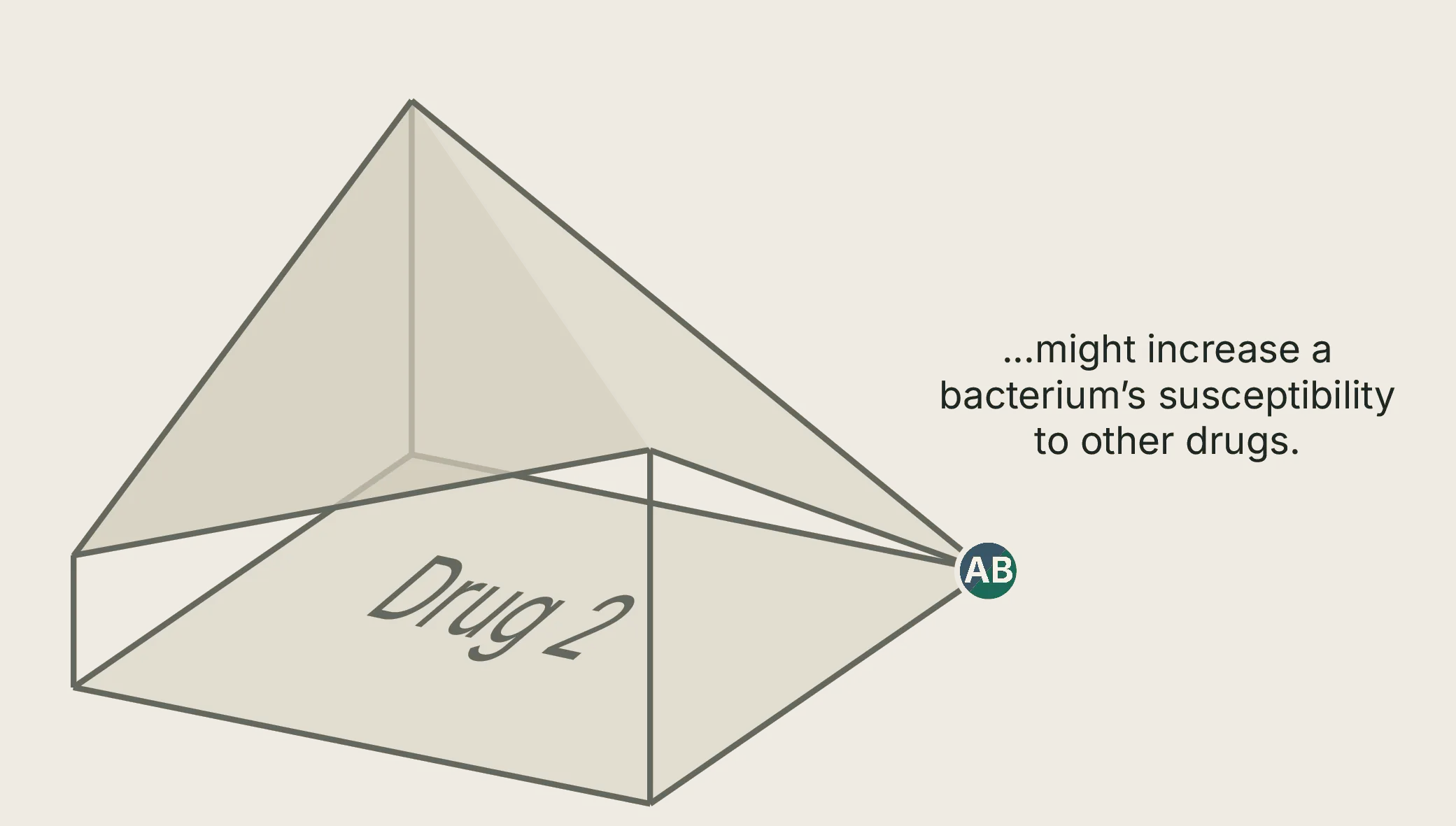
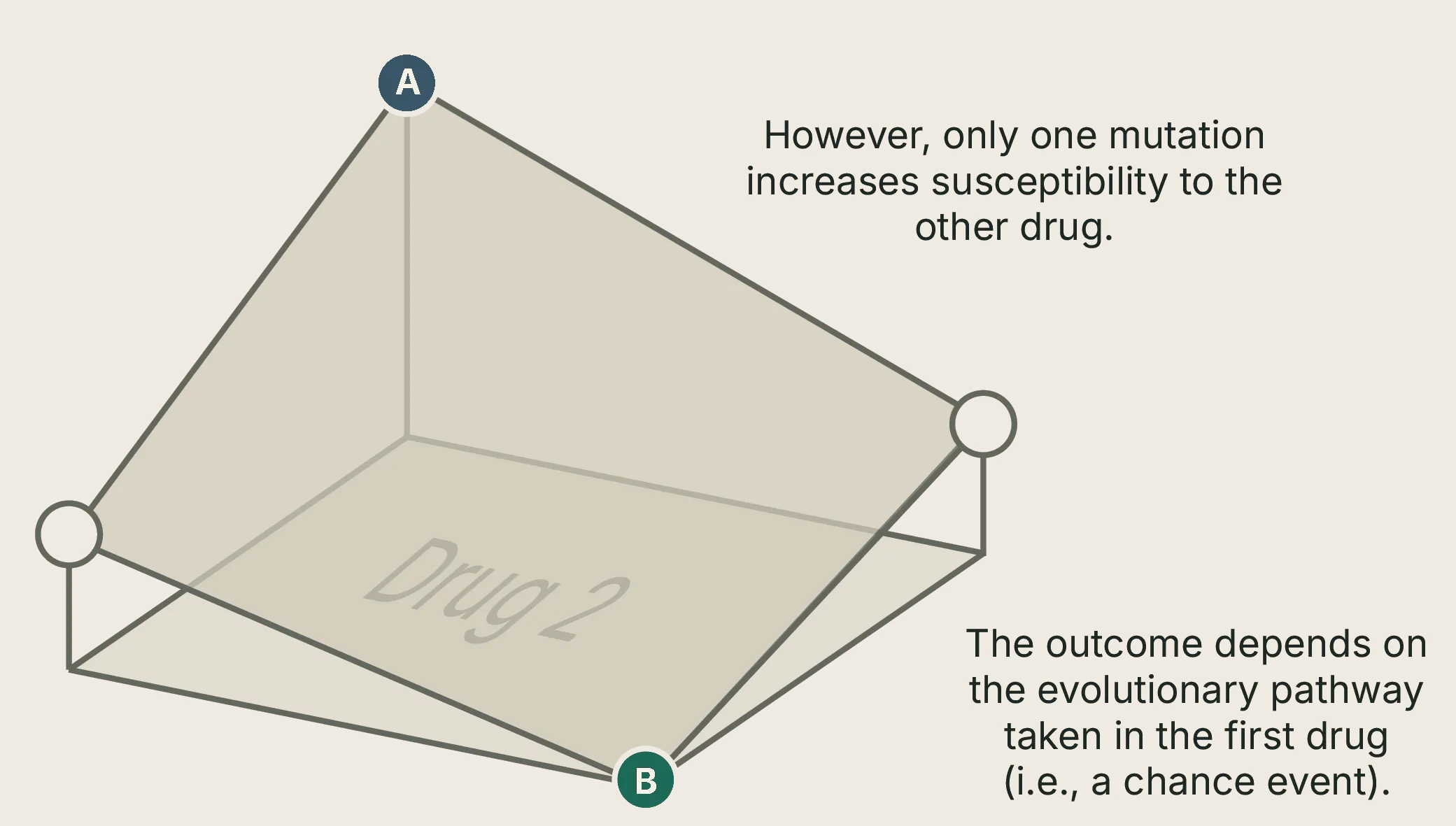
Imagine a scenario where a clinician strategically uses existing antibiotics to prevent or reverse drug
resistance in an infection. This approach should be possible by exploiting drug tradeoffs in which the
evolution of resistance to one therapy increases susceptibility to others. They would only need to alternate
to one of these other drugs at the appropriate time.
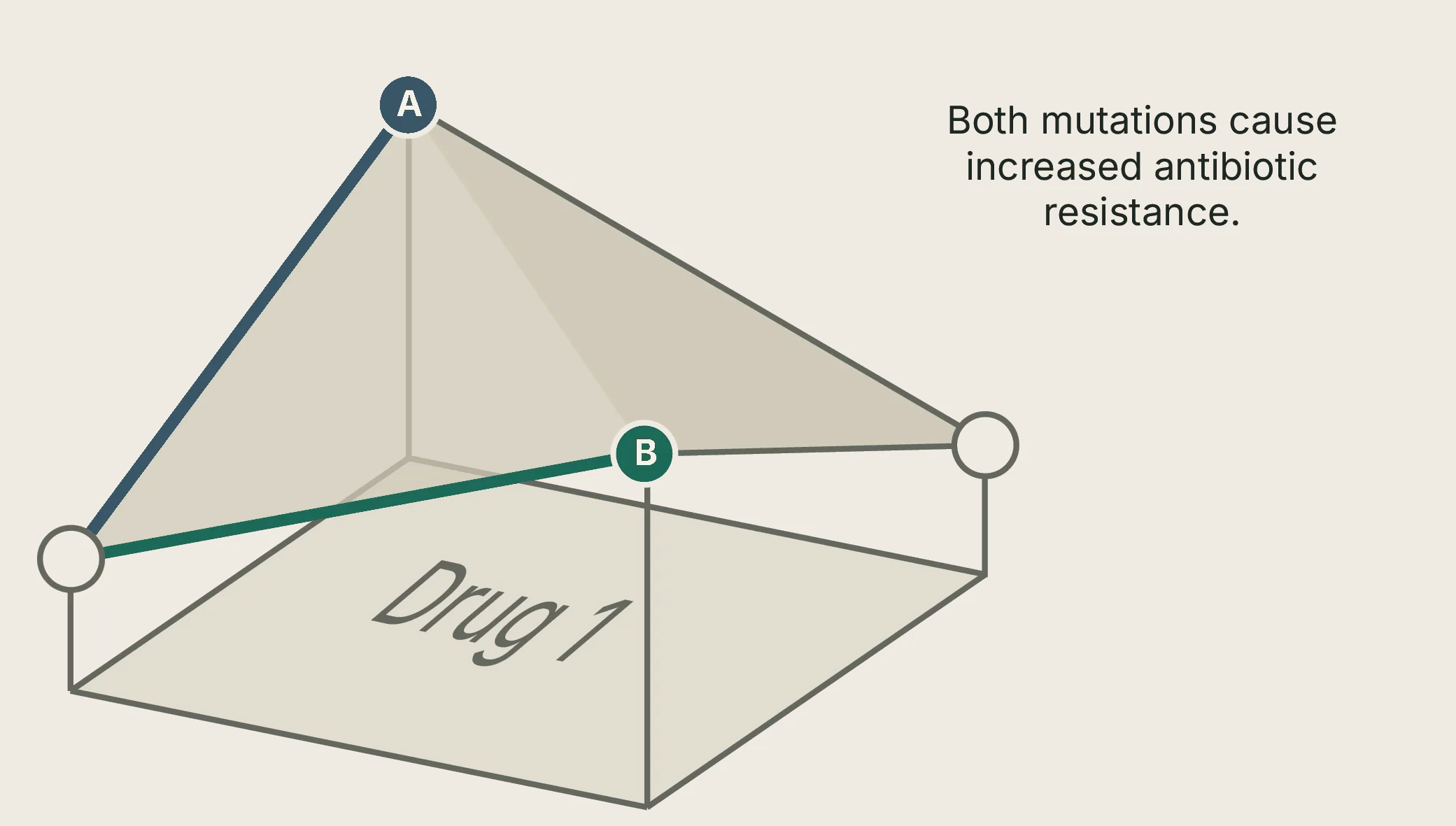
However, interactions between mutations and their genetic backgrounds can open new adaptive routes or
restrict others, challenging our ability to predict in which direction a population will evolve. We must,
therefore, comprehensively understand how these interactions shape resistance evolution to design effective
treatment strategies.
History matters.
As an HHMI Gilliam Fellow, I investigated how a bacterium's prior history influences its ability to evolve
antibiotic resistance. Using E. coli strains from the Long-Term Evolution
Experiment, we found that genomic differences between lines can unpredictably alter resistance and channel
evolution down particular mutational pathways.
Although this work implicates genetic interactions in our ability to forecast resistance evolution, it is
insufficient to focus solely on model organisms. We must systematically investigate these relationships in
pathogens — bridging the divide between bench and bedside.
As an HHMI Hanna H. Gray Fellow, I explored drug tradeoffs in S. aureus. We
discovered that this opportunistic pathogen followed at least two distinct adaptive pathways as it evolved
vancomycin resistance. These separate paths led to contrasting, yet predictable sensitivities to
second-line antibiotics. To account for this uncertainty, we developed a framework called the
Collateral Response Score (CRS) to provide a probabilistic forecast of how past antibiotic
exposure might affect future treatment outcomes.
We established that a pathogen's evolutionary history is key to forecasting its adaptability and therapeutic
responses. However, evolution is context-dependent. The selective pressures inside a flask are vastly
different from those inside the complex, dynamic environment of the human body, where evolution occurs. To
develop effective, evolution-informed therapies, we must bridge the gap between reductionist lab experiments
and the clinical reality of infections.
My laboratory will pioneer the use of organ-chip technology to overcome this challenge. By integrating
experimental evolution in these high-fidelity systems with functional genomics and phenotypic screens, we
will dissect the molecular and evolutionary mechanisms of pathogen adaptation in real-time — creating a
framework to predict and ultimately steer the evolution of antimicrobial resistance. We will focus on
chronic P. aeruginosa infections in cystic fibrosis, an area with an unmet clinical
need and an ideal model system for studying within-host evolution.
The Card Lab
Evolution-on-a-Chip.
A graphical abstractswipe to explore →
Susceptibility tests are snapshots in time that inform clinicians about whether an antibiotic works today.
They cannot provide information about how infections evolve once treatment begins. By evolving P. aeruginosa
within a living model of the cystic fibrosis airway, we will observe and track resistance and its collateral consequences as they emerge,
rather than infer them from a single endpoint. Acting on that knowledge means scoring the collateral response — its direction,
and how confidently we can call it.
The Card Lab · interactive
Will the next antibiotic work?
When a pathogen evolves resistance to one drug, its susceptibility to others can change. The
Collateral Response Score captures the direction of that change
and its predictability.
Live CRS calculator
See how the CRS is calculated. Each dot below represents a replicate population, evolved separately and measured
against a second drug. The CRS captures the overall direction of change in
second-line drug susceptibility relative to the ancestor (sign) and the predictability of that change (magnitude).
Notice that a given score can arise in two very different ways: when populations are split between resistance and sensitivity,
or when there is consistent change across replicates. Toggle between the Worked Example and Full Agreement presets to observe this distinction.
Tip: Drag the dots, or focus a dot and nudge it with ↑↓, to watch the score respond. Use the −+ buttons to change the replicate count.
The same drug, two different outcomes. A population may evolve antibiotic resistance through different
genetic pathways. Its collateral response to other drugs can change depending on which route the population takes.
Toggle between two evolutionary pathways below and watch the collateral profile invert across several second-line drugs:
knowing how resistance evolved is often as useful as knowing that it evolved.
Knowing which route a pathogen took tells a clinician which second-line drugs will still work.
In this example, an early fork yields opposite, partly predictable collateral profiles.
Pathway 1
Drug A−0.72
Drug B+0.58
Drug C−0.45
Drug D+0.18
Drug E−0.83
Drug F+0.40
Pathway 2
Drug A+0.61
Drug B−0.70
Drug C+0.38
Drug D−0.30
Drug E+0.69
Drug F−0.52
CRS as a distribution
A single number can obscure how sure we really are. Each CRS value is an estimate, not a verdict,
because it is drawn from a limited sample of replicates that could have landed differently by chance. Resampling
gives a distribution, with its width providing actionable information: narrow and far from zero is a confident
call; wide, or straddling zero, means a clinician genuinely cannot say which way evolution will go. The shape of
the distribution is often more informative than the number itself.
Narrow and far from zero — a confident, actionable prediction.
Confident — narrow, far from zero
Narrow and far from zero — a confident, actionable prediction.
Uncertain — wide, straddling zero
Wide and straddling zero — genuinely uncertain. We can't call the direction.
CRS across contexts
Confidence is context-dependent.
A clinician's ability to predict a treatment outcome can depend on the environmental context in which evolution happens.
In the preceding examples, we assumed the CRS and its distributions were measured in a simplified, laboratory environment.
But a bacterium evolving inside an inflamed human airway faces different selective pressures than one evolving in a flask,
and a collateral response that appears reliable in one setting may become less certain in another.
Tip: Drag the marker across the field, or focus it and use ↑↓←→.
CRS−0.70 · confident0 · uncertain
Local CRS at the marker
−0.70
Narrow and far from zero — a confident, actionable prediction.
Lab medium · low inflammation → CRS −0.70 — a confident, actionable call.
Airway-on-chip · high inflammation → CRS 0.00 — predictability collapses.
In the illustration above, a population appears confidently collaterally sensitive to an antibiotic in a standard lab medium (CRS = −0.70).
However, as the environment becomes more host-like and inflamed, that confidence trends toward zero.
The Evolution-on-a-Chip platform, which monitors host-like microenvironments in real time using sensors, is designed to investigate whether and
how environmental context reshapes CRS.
Is the shift itself predictable?
Is the change in CRS predictable or idiosyncratic across an environmental gradient?
This question arises from two key points already established: (i.) an infection’s response to a second
antibiotic depends on the genetic pathway the population took as it evolved resistance against a first-line agent,
and (ii.) that response can also shift across an environmental gradient. Confidence that a given treatment will
work (captured by the CRS) can depend on both.
Below, observe how a population's collateral response changes as the conditions shift from a standard lab medium to a fully host-like,
inflamed environment. For populations that evolved along Pathway 1, the change in CRS is predictable with a steady, uniform increase.
For Pathway 2 populations, an identical environmental shift leads to idiosyncratic outcomes: the CRS increases,
reverses direction, and then increases again. Using the Evolution-on-a-Chip platform, we will assess how reliably
treatment predictions hold across changing conditions.
Tip: Drag the marker along the diagonal from lab medium (bottom-left) toward the inflamed airway-on-chip (top-right);
the chart traces the score as you go. Focus the marker and step with ←→. Switch pathways to
overlay both traces.
Pathway 1smoothCRS along the path
Current CRS−0.70
Pathway 1smoothPathway 2rugged
CRS along the path — both pathways
■ Pathway 1 · ■ Pathway 2
In the illustration above, both journeys begin and end at the same score. For Pathway 1 evolved populations, there is a steady,
predictable slope as the environmental gradient changes (from CRS −0.70 → 0.00). For Pathway 2 evolved populations, the path
is idiosyncratic: small context shifts swing the score despite the same endpoints.
Same destination, very different reliability. We will investigate that reliability using the Evolution-on-a-Chip platform.
The climbers.
The team of talented researchers making the science happen.
Justin Creary
Ph.D. Student · CWRU
Justin is investigating how prior evolutionary history under varying antibiotic concentrations affects the ability of pathogens to evolve resistance to clinically relevant second-line drugs.
Shiva Ayyar
Master's Student · CWRU
Shiva is applying a 'coupon collector' framework to genomic data from our PNAS S. aureus study, exploring how idiosyncratic epistasis — where a mutation's effect depends on specific prior mutations, not just overall fitness — shapes how much of the adaptive landscape a population explores.
Josh Nworie
Postbaccalaureate
Josh is examining how the Collateral Response Score (CRS) — derived in our PNAS study — changes across different clinical backgrounds and environmental contexts.
Amira Stocks
Undergraduate · CWRU
Amira is investigating the impact of biofilm formation on the evolutionary trajectories of antibiotic resistance and how these pathways differ across varying backgrounds and drug concentrations.
Brandon Kakuda
Undergraduate · CWRU
Brandon is asking how selection strength and background impact the evolution of antibiotic resistance and subsequent drug tradeoffs.
Rohan Desai
Undergraduate · Vanderbilt
Rohan is working remotely with our group to write the analysis pipeline for several projects.
Drew Sager
Undergraduate · University of Notre Dame
Drew is a visiting summer student working with the team performing antibiotic time-kill assays and experimental evolution.
Aryan Agarwal
High School Student
Aryan is using genomic data from our PNAS S. aureus study to derive a 'heterogeneity score,' and assessing whether this metric correlates with particular drug tradeoffs.